Legal Translation
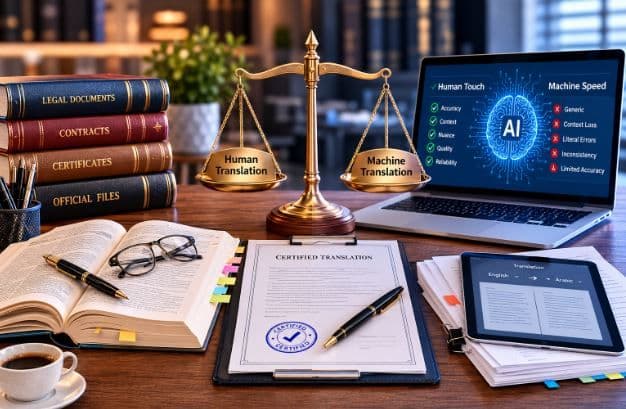
Human Translation vs. Machine Translation: Which Is Better for Official Documents and Business?
Discover the differences between human and machine translation, including the advantages and limitations of each method. Learn why professional human translation remains the safest choice for official, legal, academic, and business documents.
 July 23, 2026
 Maged
Maged 0 Comments
 8 Minutes to read
Over the past few years, the world has witnessed remarkable advancements in artificial intelligence and machine translation technologies. Today, anyone can translate an entire document within seconds using an online platform or mobile application. These innovations have made communication across different languages easier than ever before and have significantly improved access to information.
Despite this technological progress, one important question continues to arise: What is the difference between human translation and machine translation? More importantly, can machine translation tools be trusted when translating official documents, contracts, and legal paperwork, or does human translation remain the safest and most accurate option?
The truth is that each type of translation has its own strengths and appropriate use cases. Choosing between them should depend on the nature of the content and the purpose of the translation rather than speed or cost alone. While machine translation may be suitable for understanding the general meaning of a simple text, it is often not the right choice for legal, academic, or commercial documents that require absolute accuracy.
In this article, we will explain the difference between human translation and machine translation, explore the advantages and disadvantages of each, identify the situations where each option is most appropriate, and explain why governments, embassies, universities, and official institutions continue to rely on certified human translation.
What Is Human Translation?
Human translation is the process of transferring content from one language to another by a professional translator with in-depth knowledge of both languages and their respective cultures. The translator's role goes far beyond translating individual words; it involves understanding the true meaning of the text, the context in which it was written, and the purpose it is intended to serve.
A professional translator takes into account several factors that translation software often struggles to understand, including:
The author's writing style.
Cultural differences.
Industry-specific terminology.
Idiomatic expressions.
The appropriate tone of voice.
The intended target audience.
For this reason, human translation produces content that feels natural to readers, as though it were originally written in their own language rather than translated.
What Is Machine Translation?
Machine translation relies on computer software and artificial intelligence technologies to automatically translate text between different languages without direct involvement from a human translator.
These technologies have advanced considerably in recent years and can now produce much better results than they did in the past, particularly when translating simple or general-purpose content.
Some of the key advantages of machine translation include:
Exceptional speed.
Ease of use.
Lower cost.
The ability to translate large volumes of text in a short period of time.
However, despite these advantages, machine translation still faces challenges when it comes to understanding context, selecting precise terminology, and accurately translating specialized legal, technical, medical, or literary content.
Human Translation vs. Machine Translation
Although both methods aim to transfer information from one language to another, the differences between them are significant and directly affect the quality and accuracy of the final translation.
First: Understanding Meaning and Context
Context is one of the biggest differences between human and machine translation.
A professional human translator does not translate words individually. Instead, they read and understand the entire text, identify the intended message, and then rewrite it naturally in the target language.
Machine translation, on the other hand, may still interpret certain words literally, especially when they have multiple meanings or are used within a specific cultural context.
As a result, machine-translated texts may appear grammatically correct while failing to convey the author's intended meaning accurately.
Second: Accuracy of Specialized Terminology
Every field has its own terminology, whether legal, medical, engineering, financial, or technical.
A professional translator understands the approved terminology used within each industry and selects the most accurate expressions according to professional standards.
Machine translation, however, may provide literal translations of specialized terms, which can significantly alter the meaning of an entire document.
This is why companies, legal professionals, and official organizations continue to rely on specialized human translators when translating contracts, reports, and important documents.
Third: Writing Style and Readability
One of the greatest strengths of human translation is its ability to preserve the original writing style.
When translating an article, website, or marketing content, simply transferring information is not enough. The translated text should deliver the same impact and emotional tone as the original.
A professional translator can naturally restructure sentences while preserving the intended message and the legal, educational, or marketing objectives of the content.
Machine translation, by contrast, often produces text that is grammatically correct but sounds rigid, unnatural, or disconnected, ultimately reducing the reader's overall experience.
Fourth: Translation Speed
One of the most obvious advantages of machine translation is its speed. It can translate thousands of words within seconds, making it a practical option for quickly understanding the general meaning of a foreign-language article or translating informal communications.
Human translation, on the other hand, requires more time because a professional translator does far more than convert words from one language to another. Every text is carefully reviewed to ensure accuracy, correct terminology, and natural readability before it is delivered to the client.
Although human translation takes longer, the additional time invested is directly reflected in the quality and reliability of the final result.
Fifth: Cost
Machine translation is generally more affordable, and many online translation tools are available free of charge.
Human translation, however, comes at a higher cost because it relies on the expertise of a professional translator, thorough proofreading, and careful quality control.
When comparing cost against value, it becomes clear that a single mistake in translating an official document or legal contract could result in losses that far exceed the cost of hiring a qualified translator.
Sixth: Confidentiality and Data Security
Many documents contain sensitive personal, financial, legal, or commercial information, including contracts, medical reports, and business records.
When using free online translation tools, the submitted text may be processed on external servers, which can raise legitimate concerns about privacy and data protection.
Professional translation agencies, by contrast, follow strict confidentiality policies and take appropriate measures to safeguard client information, making them the safest choice for sensitive documents.
When Is Machine Translation the Right Choice?
Despite its limitations, machine translation remains useful in several situations, including:
Understanding the general meaning of an article or news report.
Translating informal personal messages.
Quickly reviewing websites written in foreign languages.
Translating internal documents that do not require legal or professional accuracy.
In these cases, machine translation can save time and help users access information more efficiently.
When Should You Rely on Human Translation?
There are many situations where machine translation should never be relied upon, as even minor mistakes may lead to legal, financial, or academic consequences.
Some of the most important examples include:
Legal Contracts
Legal contracts require precise legal terminology. Even a small translation error can alter the rights and obligations stated within the agreement.
Official Documents
These include birth certificates, marriage certificates, passports, national identity documents, and other official records submitted to government authorities or embassies.
Academic Documents
Universities and educational institutions require highly accurate translations of degrees, diplomas, and academic transcripts. Machine translation cannot provide the level of precision required for these documents.
Medical Reports
Medical documents contain highly specialized terminology. Any translation error may affect the understanding of a patient's condition or influence important medical decisions.
Websites and Marketing Content
Successful marketing depends on communicating naturally with the target audience rather than translating words literally. For this reason, marketing materials should always be translated by professionals who understand both the language and the culture of the intended audience.
Why Don't Embassies and Official Authorities Accept Machine Translation?
Most embassies and government authorities require certified translations because official documents must be accurate, reliable, and verifiable.
Machine translation tools cannot accept legal responsibility for translation errors, nor can they issue official certifications confirming that a translation faithfully represents the original document.
Certified human translations, however, undergo professional review and quality assurance and are issued by accredited translators or certified translation offices that take full responsibility for the accuracy of the translated document.
This is why human translation continues to be the accepted standard for official procedures around the world.
Can Artificial Intelligence Be Used in Translation?
Artificial intelligence has become a valuable tool that helps professional translators work more efficiently. It can speed up certain tasks, assist with terminology research, and improve overall productivity.
However, AI still cannot replace the expertise of a professional translator, particularly when working with content that requires deep contextual understanding or highly specialized legal, medical, academic, or commercial terminology.
For this reason, leading translation providers combine modern technology with human expertise, benefiting from technological efficiency while maintaining the accuracy and quality that only experienced translators can provide.
Why Do Clients Choose World Dictionary?
If you are looking for professional translation services that combine accuracy, speed, and official certification, World Dictionary offers comprehensive solutions for both individuals and businesses.
The company provides certified translation services for a wide range of official documents, including legal contracts, legal documentation, medical reports, academic certificates, and commercial content, while maintaining the highest standards of quality, confidentiality, and professionalism.
Every project is handled by specialized translators and carefully reviewed to ensure complete accuracy and full compliance with the requirements of official authorities in Saudi Arabia and internationally.
Conclusion
Understanding the difference between human translation and machine translation makes it clear that each has its own purpose and advantages. The right choice ultimately depends on the type of content and the purpose of the translation.
If you simply need to understand the general meaning of a text, machine translation may be sufficient. However, when dealing with official, legal, academic, or commercial documents, human translation remains the most accurate, reliable, and trusted solution.
Never treat translation quality as a secondary consideration. Your documents may represent an employment opportunity, university admission, business agreement, or important legal procedure. If you are looking for professional translation services that combine precision, certification, confidentiality, and on-time delivery, contact World Dictionary today. Our team of specialized translators is committed to delivering translations that meet the highest professional standards, ensuring your documents are ready to be confidently submitted to official authorities.