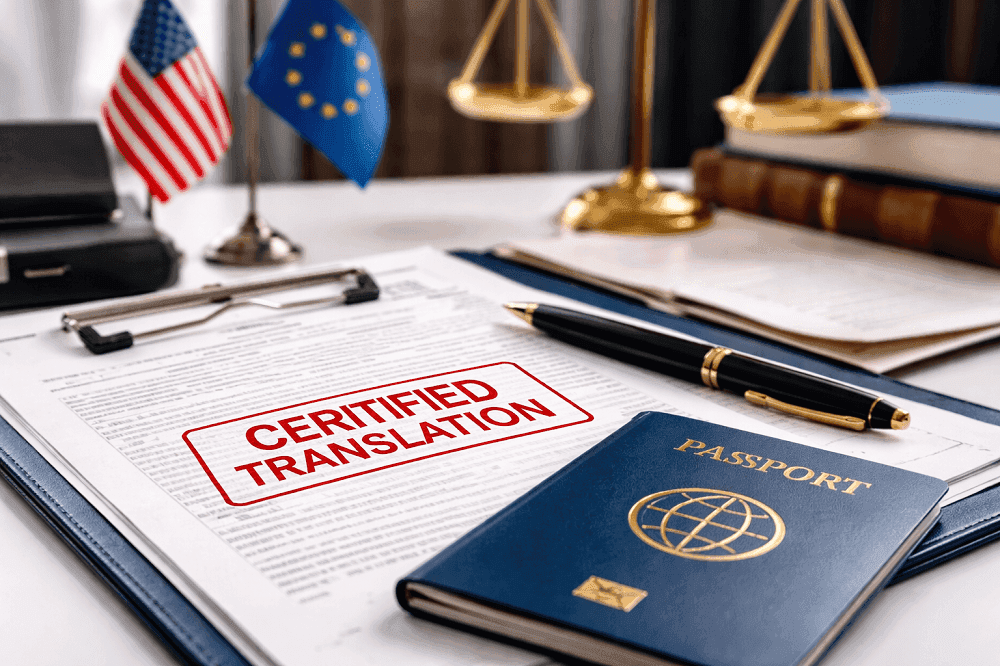
Certified Translation from the Embassy: Everything You Need to Know to Ensure Your Documents Are Officially Accepted
Learn everything about certified translation for embassy requirements to ensure your documents are accepted smoothly. Discover the essential steps to avoid delays or rejection.
 August 18, 2026
 0 Comments
 8 Minutes to read
When preparing to submit official documents to an embassy—whether for travel, immigration, studying abroad, or even authenticating papers for use outside the country you will often encounter the term “embassy-certified translation” as one of the essential requirements. This naturally raises important questions: What exactly does this mean? Is any regular translation sufficient? And what steps ensure your document is accepted without delays or rejection?
It is important to understand that this process is not simply about converting text from one language to another. Rather, it is an official procedure governed by strict standards, and any error—no matter how minor it may seem—can result in delays or complete rejection of your application. That is why understanding the nature of certified translation and choosing an experienced specialized provider such as Qamoos Al-Alam is a necessary step to ensure smooth processing.
What Does Embassy-Certified Translation Mean?
Embassy-certified translation is an official translation prepared by an accredited translation office and stamped and signed to confirm its complete accuracy and compliance with the original document. This type of translation is considered valid for submission to embassies and consulates, provided it complies with the specific requirements of each authority.
In other words, embassies do not accept ordinary translations. They require translations that are:
- Issued by an accredited translation office
- Officially stamped and signed
- Fully identical to the original document, with no omissions or additions
- Written in clear, precise, and formal language
These requirements are not merely formalities—they provide legal assurance of data accuracy and prevent ambiguity or misrepresentation.
When Do You Need Embassy-Certified Translation?
This type of translation is required for many official procedures, including:
- Applying for work or study visas
- Completing immigration or family reunification procedures
- Authenticating marriage contracts or marriage to a foreign national
- Translating birth or death certificates
- Certifying academic degrees and transcripts
- Translating commercial records and official contracts
- Traveling abroad for medical treatment
It is important to note that embassy requirements may differ in some details. Some may require a specific format, additional information, or further legalization. Working with an experienced provider helps avoid mistakes and saves both time and effort.
Why Do Some Embassies Reject Translations?
Translation rejection by embassies is not uncommon and is often caused by:
- Missing or unclear official stamp
- Incomplete translation office details
- Linguistic or legal errors
- Mismatch between the translation and the original document
- Use of inaccurate or unofficial terminology
- Failure to comply with the required format or layout
Although these issues may appear minor, they can delay the entire process. Careful review before submission is therefore essential.
The Difference Between Regular Translation and Embassy-Certified Translation
Regular translation may be suitable for personal or informal use, but it is not legally recognized by governmental or diplomatic authorities.
- Embassy-certified translation, however, offers:
- Official authentication through stamp and signature
- Recognition by embassies and government entities
- Eligibility for legalization by relevant authorities when required
- Thorough review to guarantee complete accuracy
This provides a higher level of legal security and significantly reduces the risk of delays or rejection.
Steps to Obtain Embassy-Certified Translation
To ensure your translation is accurate and accepted, follow these steps:
1. Choose an accredited translation office
This is the most important step, as experienced offices understand embassy-specific requirements and details others may overlook.
2. Provide a clear copy of the document
Whether original or high-quality scanned copy, document clarity ensures accurate translation and minimizes errors.
3. Ensure precise translation
All official terminology and data must be transferred exactly as stated, without interpretation or alteration.
4. Conduct thorough proofreading and review
The translation should undergo both linguistic and legal review to eliminate errors or omissions.
5. Obtain official stamp and signature
The office’s accredited stamp, signature, and official details must be added to grant legal validity.
6. Complete legalization if required
Some embassies require authentication from the Ministry of Foreign Affairs or other authorities.
The Importance of Accuracy in Certified Translation
With official documents, there is zero margin for error. A slight mismatch in a name, date, or identification number can result in:
- Long delays in processing
- Application rejection
- Restarting procedures from the beginning
- Additional financial costs
This is why choosing a specialized and reliable provider is not a luxury—it is a necessity.
Why Choose World Dictionary?
When looking for a trusted provider for embassy-certified translation, World Dictionary offers extensive practical experience in translating official documents of all types, ensuring:
- Full compliance with official standards
- Precise knowledge of embassy-specific requirements
- Professional review before delivery
- Strict confidentiality of personal data
- Timely delivery without compromising quality
- Assistance with legalization procedures when required
Every official document may represent a life-changing step whether for work, education, or family stability. It deserves the highest level of care.
Important Tips Before Submitting Translation to an Embassy
- Verify the embassy’s exact requirements in advance
- Never alter the translation after it has been stamped
- Keep an extra copy for future use
- Ask about any additional legalization requirements
- Work only with a trusted office to avoid repeating procedures
Obtaining embassy-certified translation is not just a formality—it is a critical legal step that ensures your documents are accepted without delays or complications. Accuracy at this stage protects you from wasted time, repeated procedures, and unnecessary stress.
When preparing to submit your documents to any embassy or official authority, choosing a specialized and experienced provider such as Qamoos Al-Alam gives you confidence that your documents are translated accurately, officially certified, and fully ready for submission.